
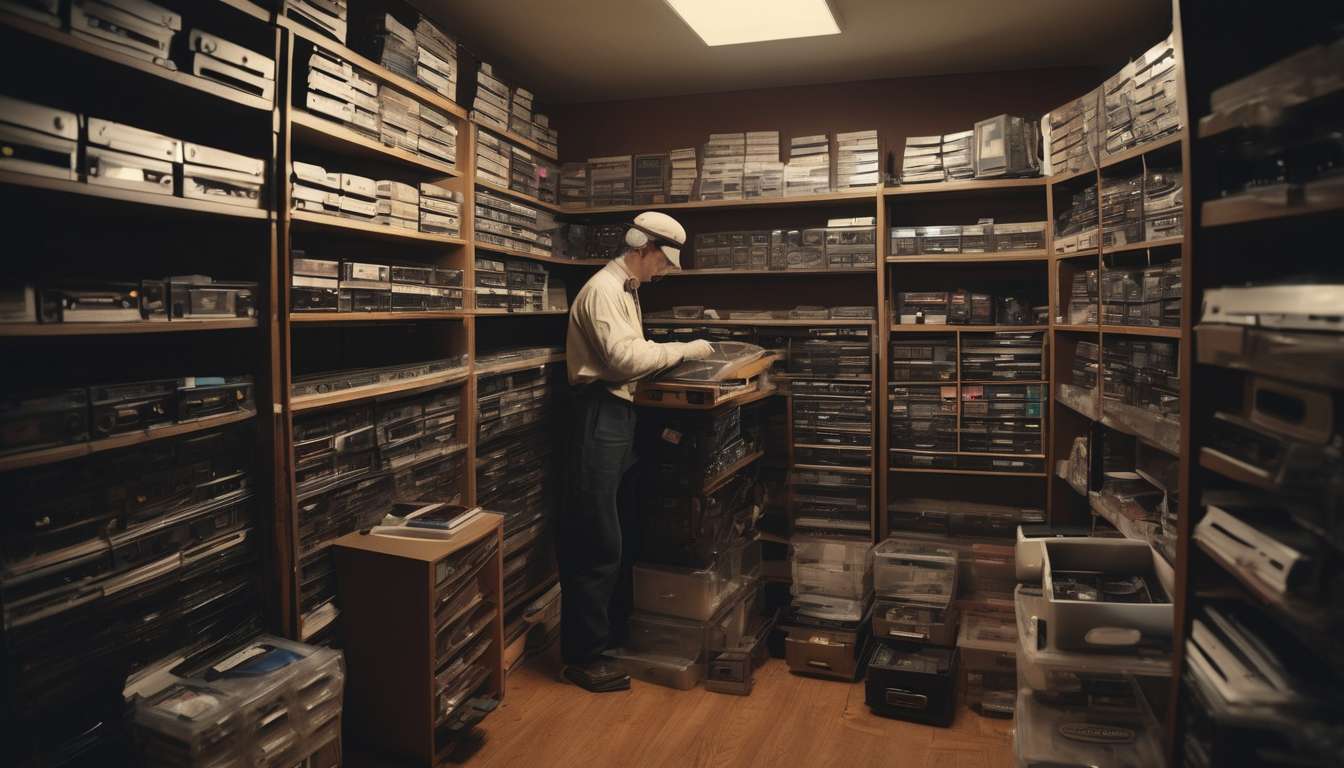
Census-style surveys estimate that over 40% of early adult video content exists now only in deteriorating physical formats, a startling gap that compels us to act.
We trace the tangled evolution of adult media not as voyeurs but as custodians, recognizing that these materials reflect shifting technologies, cultural norms, and legal battles.
Together we confront the ethical and logistical questions of preserving material that mainstream archives often ignore:
- Who decides what is worth saving?
- How do we protect privacy and consent in historical collections?
- Which technical standards will ensure future accessibility?
Our work documents not only pixels and reels but the social contexts that shaped production and reception.
By mapping preservation strategies — from digitization workflows to metadata practices — we aim to build inclusive, responsible records that acknowledge adult video as part of media history.
This article outlines the stakes, challenges, and practical steps for safeguarding an overlooked but significant archive of human expression.
Historical Scope
We trace how adult video formats, distribution channels, and cultural attitudes have evolved from the 1960s to the present to understand what we must preserve and why.
We map transitions from film reels and VHS tapes to DVDs and streaming, noting how each format shaped creators, audiences, and community norms.
We highlight the role of digital preservation in ensuring fragile analog materials survive and that born-digital works remain accessible.
We emphasize precise metadata practices so people can find, contextualize, and interpret holdings across platforms and generations.
We recognize that preserving content also means preserving histories of production, distribution, and reception that foster connection and mutual recognition.
We commit to stewardship that balances discoverability with respect for individual dignity, attending to access/privacy considerations in cataloging and sharing.
We invite contributors—archivists, scholars, and community members—to help build inclusive, well-documented collections that honor diverse experiences and make shared cultural memory dependable and welcoming for those who seek it.
Ethical Considerations
We must balance the imperative to preserve adult video media with rigorous safeguards for consent, privacy, and the dignity of everyone depicted.
We recognize that digital preservation carries responsibilities: we document material while honoring the people represented and the communities that steward this history. We’ll insist on documented consent wherever possible, and where it’s absent we’ll restrict use to contexts that respect dignity and minimize harm.
We’ll apply robust metadata practices that record provenance, consent status, and any restrictions, so future users understand context and limits.
We’ll design access/privacy controls that are granular — offering tiered access, embargoes, and authenticated use for researchers while preventing casual exposure.
We’ll engage with performers, advocates, and community archivists as partners in setting policies, ensuring decision-making feels inclusive and shared.
By centering transparency, accountability, and community care in our workflows, we’ll create a preservation practice that’s ethically sound, socially responsible, and rooted in mutual respect.
Legal Frameworks
We must navigate a complex patchwork of laws—copyright, obscenity statutes, privacy and publicity rights, and age-verification requirements—to ensure our preservation practices are legally compliant and defensible.
We recognize that staying together as a community helps us interpret statutes, share precedents, and support mutual risk management.
We document rights status clearly, record provenance, and attach robust metadata to every item so legal claims and consent records travel with the files.
We balance the mission to preserve cultural history with strict obligations around access/privacy:
- Controlled access tiers to limit who can view sensitive materials.
- Redaction where necessary to protect privacy.
- Clear procedures for takedown or restriction when rights or privacy concerns arise.
We develop standard agreements with donors and rights holders, insist on age-verification records at ingestion, and keep audit trails that demonstrate due diligence.
By aligning policy, practice, and documentation, we create a defensible, inclusive preservation program that protects creators, performers, researchers, and our collective archive.
Technical Standards
We’ll adopt clear, interoperable technical standards for file formats, codecs, storage integrity, and documentation so our preserved adult video collections remain usable, authentic, and portable over time.
Preferred, open formats and stable codecs
- We outline and publish preferred, open container formats and codecs (e.g., formats that prioritize longevity and broad tool support).
- We provide implementation guidance and test vectors to validate encoding/decoding across platforms.
Checksum regimes, redundancy, and refresh cycles
- We commit to checksums (e.g., cryptographic hashes) computed at ingest and during periodic audits.
- We require redundancy across geographically separated storage nodes and regular bit-level fixity checks.
- We define refresh/migration schedules to transfer content off aging media before failure or obsolescence.
Standardized descriptive and technical metadata
- We adopt consistent descriptive, administrative, and technical metadata schemas so every item is discoverable and contextualized.
- We include required fields and controlled vocabularies to support accurate search, rights management, and responsible labeling.
We’ll balance access/privacy by defining access tiers, authentication, and encryption practices that honor contributors and subjects while enabling research within our community.
Access tiers and authentication
- We define clear access levels (e.g., open, registered-researcher, restricted, embargoed) with corresponding approval workflows.
- We require authenticated access and logging for non-public tiers.
Encryption and privacy protections
- We prescribe encryption at rest and in transit where appropriate, plus redaction/blur policies for identifiable subjects where necessary.
- We specify retention and deletion policies tied to consent and legal obligations.
We’ll document provenance, chain-of-custody, and versioning so authenticity can be demonstrated without ambiguity.
Provenance and chain-of-custody
- We record detailed provenance metadata at ingest and for every transfer or transformation.
- We maintain immutable logs of who accessed, modified, or migrated each item.
Versioning and authenticity
- We establish version control for derivatives and restoration work, linking each version to source files and checksums.
- We use signed manifests or similar mechanisms so authenticity assertions can be independently verified.
We’ll publish implementation profiles and test vectors so partners can interoperate confidently.
Interoperability and testing
- We publish implementation profiles that specify exact combinations of formats, container parameters, codec settings, and metadata profiles.
- We provide test vectors and sample manifests to validate partner implementations and automated toolchains.
We’ll also establish routine audits and migration plans to prevent obsolescence.
Audits and migration planning
- We schedule periodic audits of fixity logs, metadata completeness, and access controls.
- We maintain documented migration plans for codecs, containers, and storage media with assigned responsibilities and timelines.
By sharing templates, tools, and governance expectations, we create a welcoming network of practitioners who trust one another to steward these materials for the long term.
Community resources and governance
- We publish templates (SOPs, ingest checklists, access-request forms) and open-source tools to lower the barrier to entry.
- We articulate governance expectations, roles, and escalation paths to build trust and accountability among partners.
Digitization Workflows
We will define clear, repeatable digitization workflows that specify source condition assessment, capture settings, file naming, quality checks, and metadata capture so every transfer from analogue to born‑digital meets our technical and ethical standards.
Workflows will be practical, shared, and inclusive.
- They will make roles and responsibilities explicit so everyone on the team knows their role and feels part of stewardship.
- We will train volunteers and staff on consistent naming conventions, capture presets, and incident reporting to reduce errors and build trust.
We will document handling and capture steps that minimize risk to materials and data.
- Procedures for handling fragile media.
- Selection of lossless capture formats and appropriate capture settings.
- Embedding basic provenance without repeating detailed metadata policies (those will be documented separately).
We will implement routine quality assurance and preservation checks.
- Schedule routine quality checks at defined intervals.
- Generate and record checksums for ingested files.
- Perform verified storage ingest into preservation systems.
We will balance access with privacy and ethical controls.
- Apply tiered permissions to restrict or expose content appropriately.
- Define redaction procedures where necessary to protect sensitive information.
We will make workflows simple, enforceable, and continuously improved.
- Iterate workflows based on feedback and audits.
- Keep steps concise and actionable so staff can reliably follow them.
By sharing these practical processes we create a welcoming, responsible program that preserves material and protects people.
Metadata Practices
We’ll capture consistent, structured descriptive, technical, and rights information at ingest so files stay discoverable, trustworthy, and responsibly managed.
We build metadata schemas that reflect the specific histories, creators, formats, and provenance of adult video media while aligning with broader digital preservation standards.
We use controlled vocabularies and persistent identifiers so records remain interoperable and each item can be reliably referenced over time.
We document file formats, checksums, capture dates, and chain-of-custody events to support long-term integrity and migration planning.
We balance descriptive metadata specificity with respect for contributors and subjects, helping community members find relevant materials and understand context.
We tag sensitive attributes to inform downstream decisions about access and privacy without making those decisions at ingest.
We maintain clear policies for metadata stewardship, versioning, and audit trails, and we train staff to apply them consistently.
We treat metadata as an active preservation layer to strengthen trust, foster inclusion, and ensure this cultural record remains meaningful and usable for future audiences.
Access and Privacy
We’ll ensure that access policies and privacy protections are tightly integrated with preservation workflows so materials remain discoverable to appropriate users while sensitive information and contributors’ rights are safeguarded.
We balance openness and care by defining clear access/privacy tiers tied to consent, legal constraints, and community norms.
We document these decisions in metadata fields so researchers can understand restrictions without exposing private details.
We adopt technical and procedural controls to enforce protections:
- Role-based access controls to limit who can see or change materials.
- Authenticated access for sensitive collections.
- Redaction workflows when consent is ambiguous.
We build contributor-centered review and remedy mechanisms so contributors and subjects can request review, correction, or removal; these requests are handled with transparency and respect.
We train staff and volunteers in ethical handling and maintain audit trails to show who accessed what and why.
We prioritize interoperable standards so access decisions travel with the files across systems.
By centering trust, clarity, and shared responsibility, we create a welcoming preservation environment where people feel included, respected, and confident that digital preservation work protects both history and privacy.
Community Partnerships
We will collaborate with local communities, creators, and advocacy groups to co-design preservation priorities, policies, and practices that respect lived experience and shared values.
Community partnerships will center trust: community advisors will help determine what gets preserved, how metadata is applied, and who can gain access or receive privacy protections.
We will create clear, adaptable agreements so contributors know how their work will be described, stored, and used, and we will update those agreements as needs change.
We will train community members in digital preservation techniques and metadata standards so everyone can participate meaningfully, not just observe.
We will establish advisory boards that include performers, producers, researchers, and privacy advocates to balance transparency with safety.
We will pilot shared infrastructure models that enable controlled access/privacy tiers and community-managed collections.
We will measure success using community-centered metrics:
- How welcomed contributors feel.
- How accurately materials are described.
- How effectively access/privacy controls protect vulnerable people.
Together, we will make preservation practices accountable, inclusive, and sustainable for the communities whose histories we steward.
How do digital preservation projects fund ongoing storage and maintenance costs for adult video collections?
We often ask how projects fund ongoing storage and maintenance costs for sensitive collections.
We pool funding sources.
- Grants
- Institutional support
- Community donations
We pursue partnerships for shared infrastructure.
- Libraries
- Archives
We use multiple revenue and resource strategies.
- Tiered access fees
- Crowdfunding
- Volunteers for metadata work
We plan for technical resilience and cost control.
- Budget for migration and redundancy
- Negotiate cloud credits
We maintain transparency to build trust.
- Public stewardship plans
- Community inclusion and confidence
What strategies exist for verifying the authenticity of digitized adult video content and preventing the circulation of altered or deepfake material?
Goal: Verify authenticity of digitized adult video files and prevent circulation of altered or deepfake content.
Approach: Use cryptographic hashes, digital signatures, secure timestamps, provenance metadata, chain-of-custody logs, trusted repositories with access controls, forensic analysis, deepfake detection tools, and community reporting. Collaborate and share findings to maintain trustworthy collections.
Implementation steps:
-
Content hashing and integrity verification.
- Compute a strong cryptographic hash (e.g., SHA-256 or stronger) for each original file at ingestion.
- Store the hash in metadata and in an immutable ledger or secure database.
- Verify hashes on access or distribution to detect any bit-level changes.
-
Digital signatures and provenance attestation.
- Have an authorized party sign the file hash with a private key to assert origin.
- Publish the signer’s public key and use PKI or a web-of-trust model so recipients can validate signatures.
- Record signer identity, role, and any relevant credentials in the provenance metadata.
-
Secure timestamps and notarization.
- Obtain trusted timestamps (e.g., from a Timestamp Authority or blockchain timestamp) when the file is ingested and signed.
- Include timestamp assertions in the provenance record so the creation/ingestion time is verifiable.
-
Provenance metadata standardization.
- Adopt or extend provenance schemas (e.g., W3C PROV or an appropriate domain-specific schema) to capture:
- Original source and uploader identity (as allowed by privacy/consent policies).
- Ingestion time, hashing algorithm used, signature details.
- Chain-of-custody events (who accessed/transformed the file and when).
- Any consent, license, or model-release metadata required.
- Store metadata in machine-readable formats (JSON-LD, RDF) alongside the file or in a linked registry.
- Adopt or extend provenance schemas (e.g., W3C PROV or an appropriate domain-specific schema) to capture:
-
Chain-of-custody logging and access controls.
- Log all custody events (upload, copy, edit, review, distribution) to an auditable store.
- Use role-based access control and least-privilege principles for who can view, sign, or modify files/metadata.
- Consider immutable logs (append-only databases, blockchain, or WORM storage) to prevent tampering.
-
Trusted repositories and distribution controls.
- Host verified originals in controlled, trusted repositories with documented policies for preservation and access.
- Provide verified-download mechanisms that include integrity and signature checks for recipients.
- Offer different access tiers (e.g., redacted previews vs. verified full files) to protect privacy and consent.
-
Forensic analysis and deepfake detection.
- Run automated and manual forensic checks at ingestion and periodically, using multiple detection tools and techniques.
- Flag anomalies in pixels, audio, compression artifacts, face/voice mismatches, and inconsistent metadata.
- Combine tool outputs with human review to reduce false positives/negatives.
-
Community reporting and feedback loops.
- Provide clear channels for users and experts to report suspected alterations or misattribution.
- Triage reports, re-run forensic analyses, and update provenance/status markers (e.g., “verified,” “suspected altered,” “under review”).
- Publish findings and remediation actions where appropriate.
-
Collaboration and shared intelligence.
- Share indicators, detection models, and anonymized findings with trusted partners to improve detection and response.
- Coordinate on best practices, standards, and incident response playbooks.
- Support training and capacity building for forensic analysts and platform moderators.
-
Legal, ethical, and privacy safeguards.
- Ensure all measures respect consent, privacy, and applicable law.
- Redact or restrict personally identifying metadata where required.
- Balance transparency (for verification) with protections for participants.
Key outcome: Combining cryptographic provenance (hashes, signatures, timestamps), standardized metadata and auditable custody logs, trusted repositories with access controls, robust forensic/deepfake detection, and coordinated community processes will substantially increase confidence in the authenticity of digitized adult videos and reduce circulation of altered or deepfaked content.
How are age-verification and consent records handled for performers when historical documentation is incomplete or missing?
When historical age-verification or consent records are incomplete, we err on the side of caution and treat material as suspect.
We seek corroborating evidence, consult industry registries, and contact rights holders or performers’ representatives.
If verification can’t be satisfactorily established, we restrict access, apply takedowns, or label content as unverifiable.
We prioritize survivor-centered policies, transparency about gaps, and procedures that prevent harm while preserving trustworthy archives.
Conclusion
You’ve traced how preserving adult video media spans eras, ethics, law, and tech, and you’ll keep balancing access with dignity.
You’ll adopt standards, streamline digitization, and embed rich metadata so materials stay discoverable and contextualized.
You’ll navigate privacy and legal limits while building community partnerships that center creators, subjects, and researchers.
Ultimately, you’ll make thoughtful, sustainable preservation choices that honor histories often marginalized, ensuring these records remain responsibly accessible for future study.